
tactics
Coastal sea trout fly fishing in Norway's Arctic fjords
Wading a beach and casting a fly to wild trout feeding in the sea: what coastal sea trout fishing is, when the season runs in the Arctic north, how the tide moves the fish, and the gear and flies for the fjords around Alta.
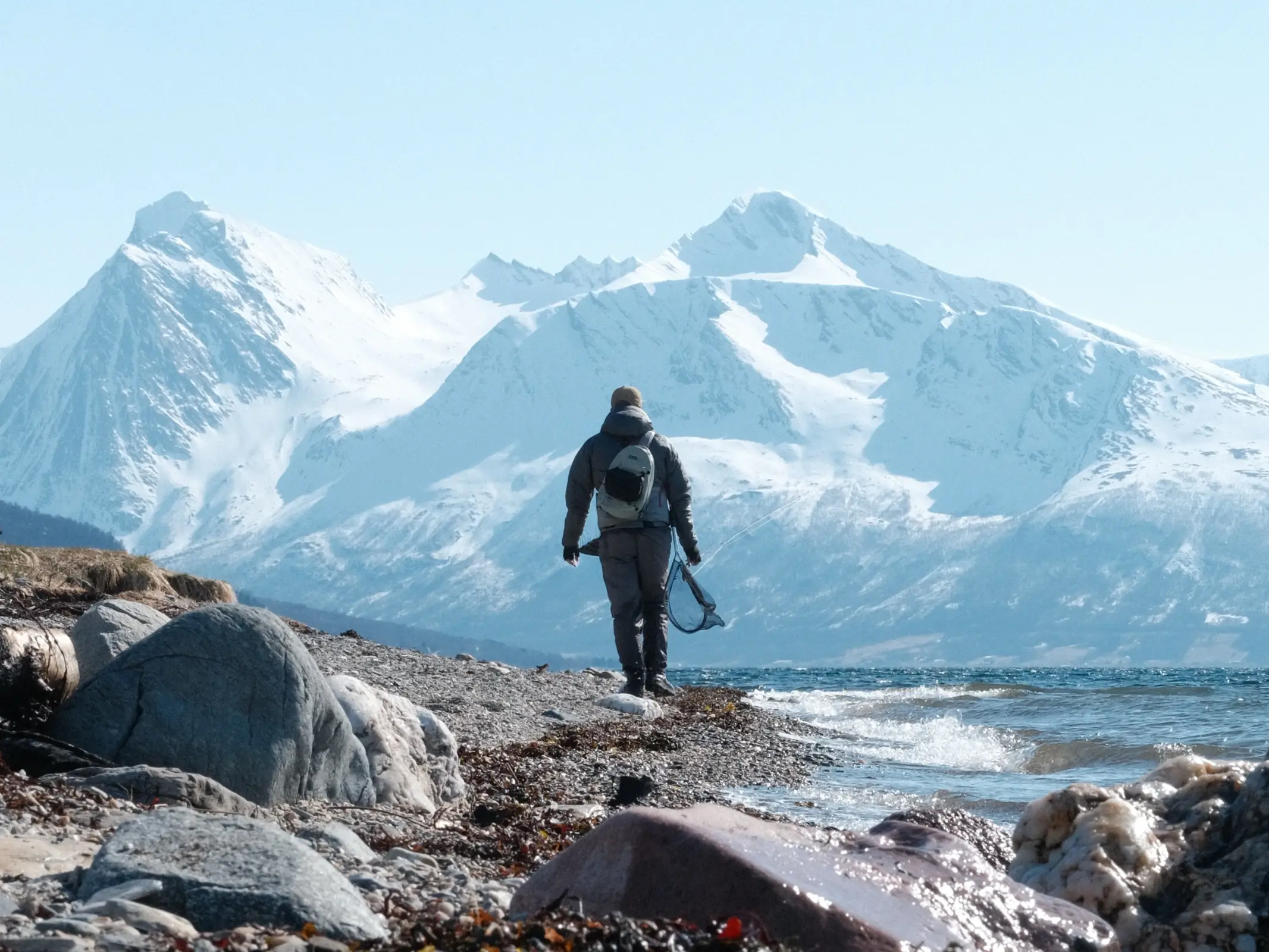
Coastal fly fishing for sea trout is little known outside northern Europe. Maybe you have heard about the sea trout of Tierra del Fuego, caught in the rivers as they come back from the sea. Coastal fishing targets the same kind of fish, sea-run brown trout, but in the sea itself, while they cruise the shoreline looking for a meal. You wade a beach, cast a single-hand rod and strip a small shrimp fly along the shore.
This style of fishing is common in Denmark and southern Sweden, and along much of the Norwegian coast. This article focuses on Alta and the surrounding fjords of northern Norway, where we fish it ourselves. If you want to try it with a guide, see our Arctic Sea Trout Camp.
Sea trout: a migratory sea-run brown trout
A sea trout is a brown trout that goes to sea to feed and comes back to its river to spawn. Taxonomically it is the same fish as a resident freshwater brown trout: same species, Salmo trutta. Some trout from the same river go to sea, others stay home. The ones that go to sea are also known as anadromous brown trout: born in fresh water, feeding in the sea, back to the river to spawn, like salmon. In the sea the trout turn silver and grow fast.
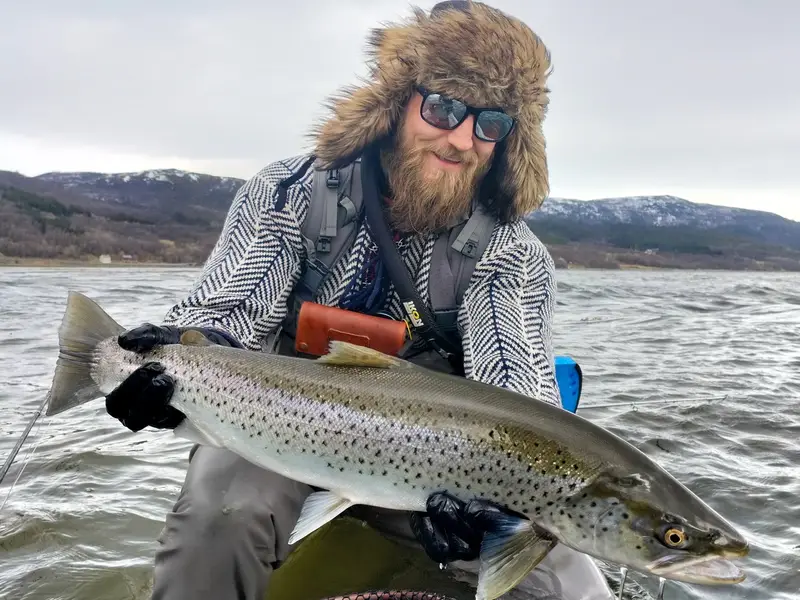
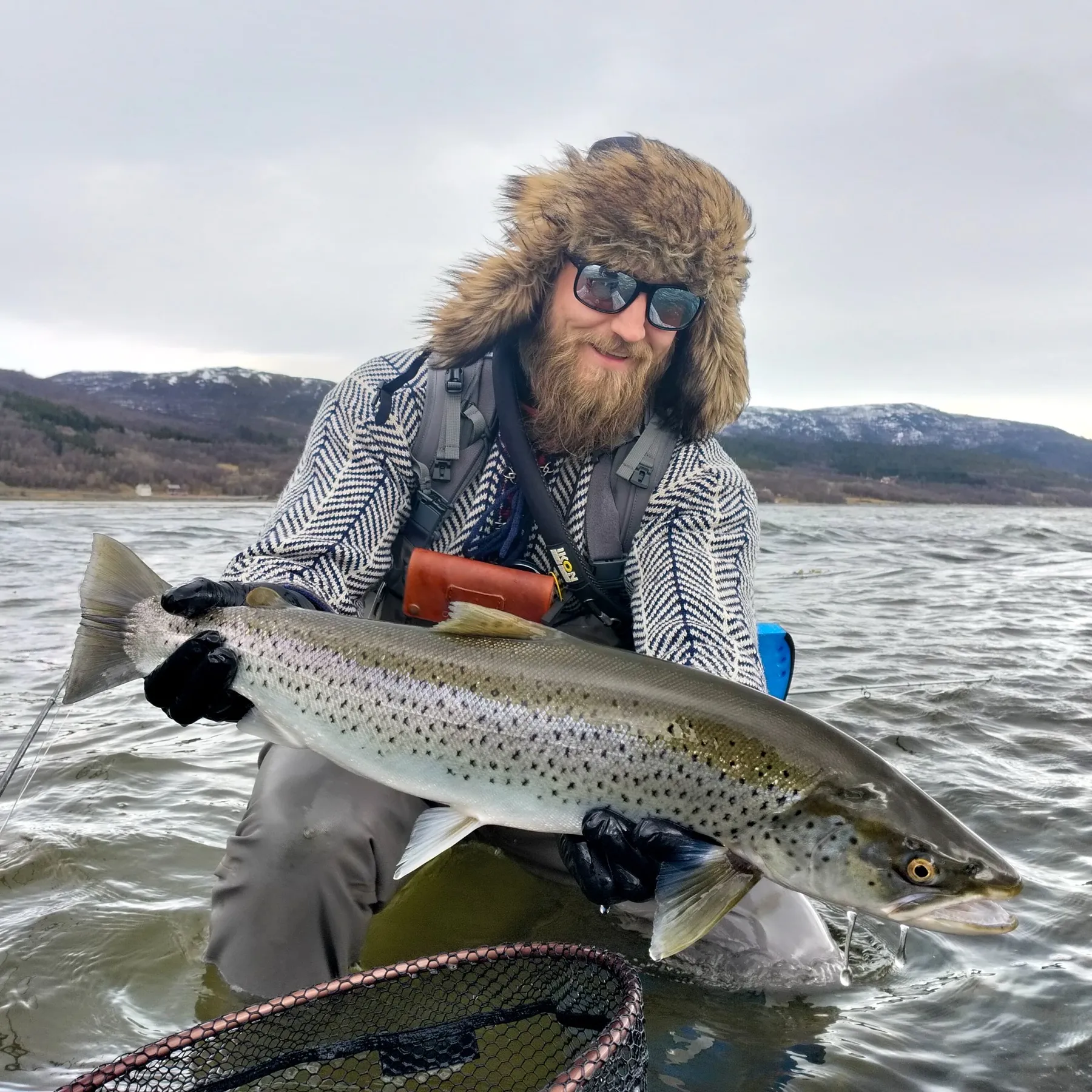 A big sea trout from the fjord.
What is coastal sea trout fly fishing?
Fly fishing for sea trout in the Norwegian fjords is usually wade fishing from the shore. The typical sea trout beach is a rocky shore with a belt of seaweed and patches of sand or gravel between the stones. The weed holds shrimp and small fish, and the trout come in to hunt along it.
Often on calmer days you can spot the trout cruising by from the swirls they make when they feed on shrimp close to the surface. Then it is sight fishing, and the game is getting your fly in front of a moving fish.
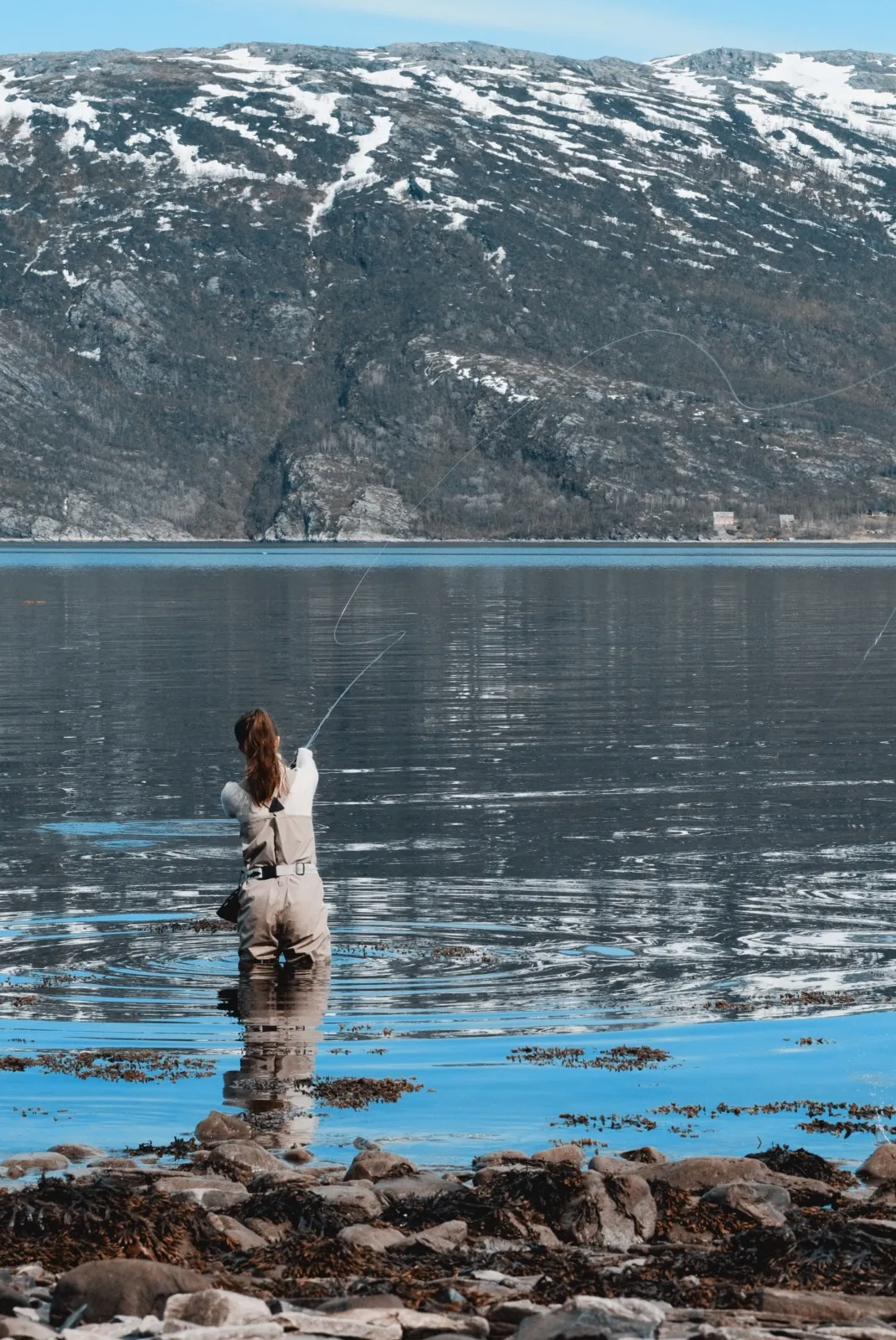 Calm days are for sight fishing: the trout give themselves away with swirls as they take shrimp near the surface.
Sea trout season in Norway
Studies have found that some sea trout feed in the sea all year round, even in the far north, while others go back to the river to spawn and spend the winter there. In Alta and the other northern fjords the peak is May and June, when the fish that wintered in the rivers drop down to the fjord. The overwintered trout are often skinny and feed hard on small crustaceans, marine worms and small fish, mostly young herring.
A 2007 tagging study in the Alta fjord found the sea trout choose the warmer inner parts of the fjord and stay within about three metres of the surface, which is exactly where a wading angler can reach them. Tagged sea trout there swam in water around 12 °C on average, the warmest they could find, while the sea-run Arctic char sharing the fjord stayed out in colder water.
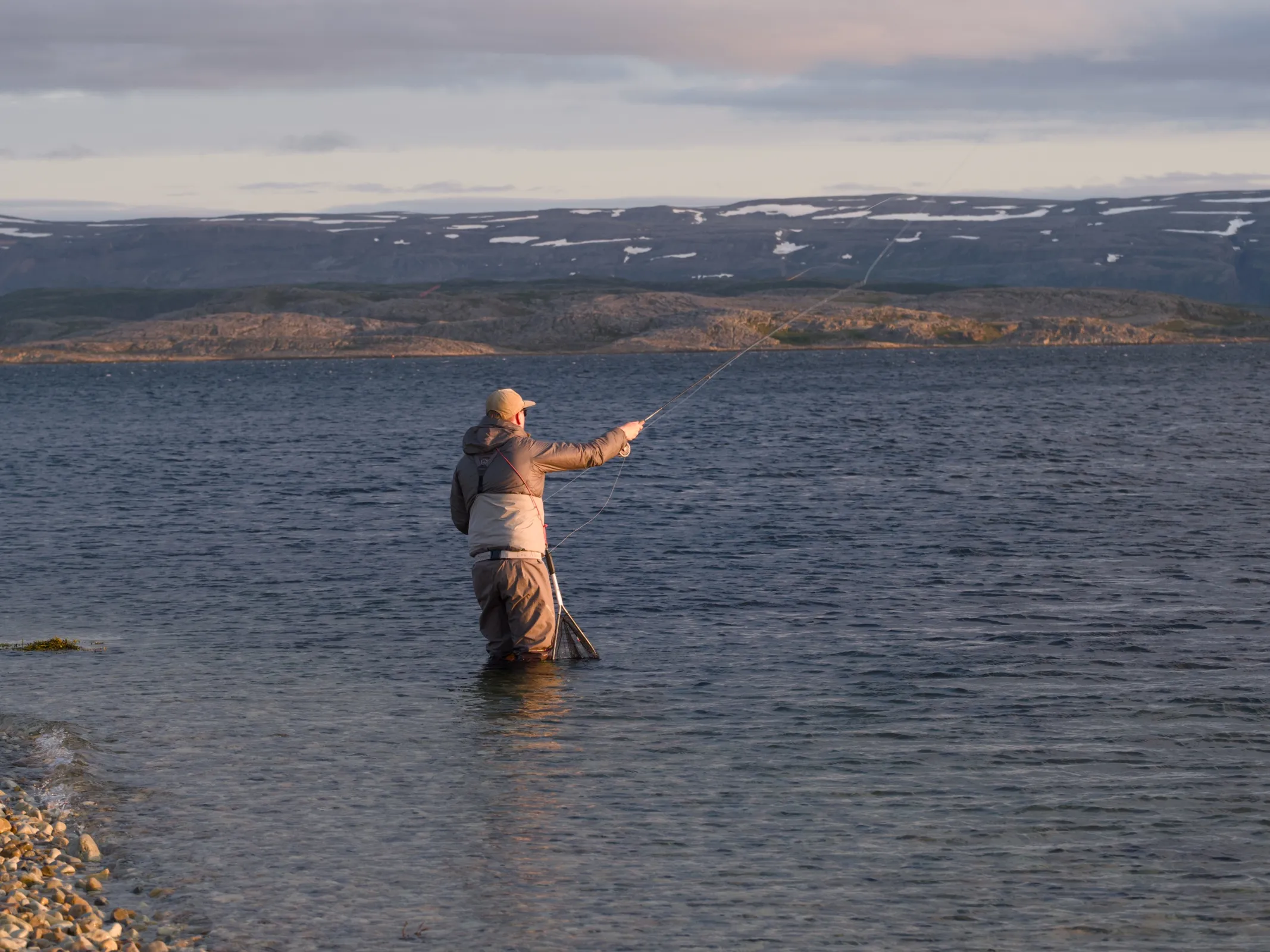 Evening on the Arctic coast. Under the midnight sun the days are endless.
Fishing the tide
The trout move with the tide. A beach that was empty can suddenly be full of trout a few hours later. The best tide depends on the spot and the time of the year, but often the first hour or two after low or high tide is the best.
This is where a local guide is invaluable. Learning the right spots takes a lot of trial and error.
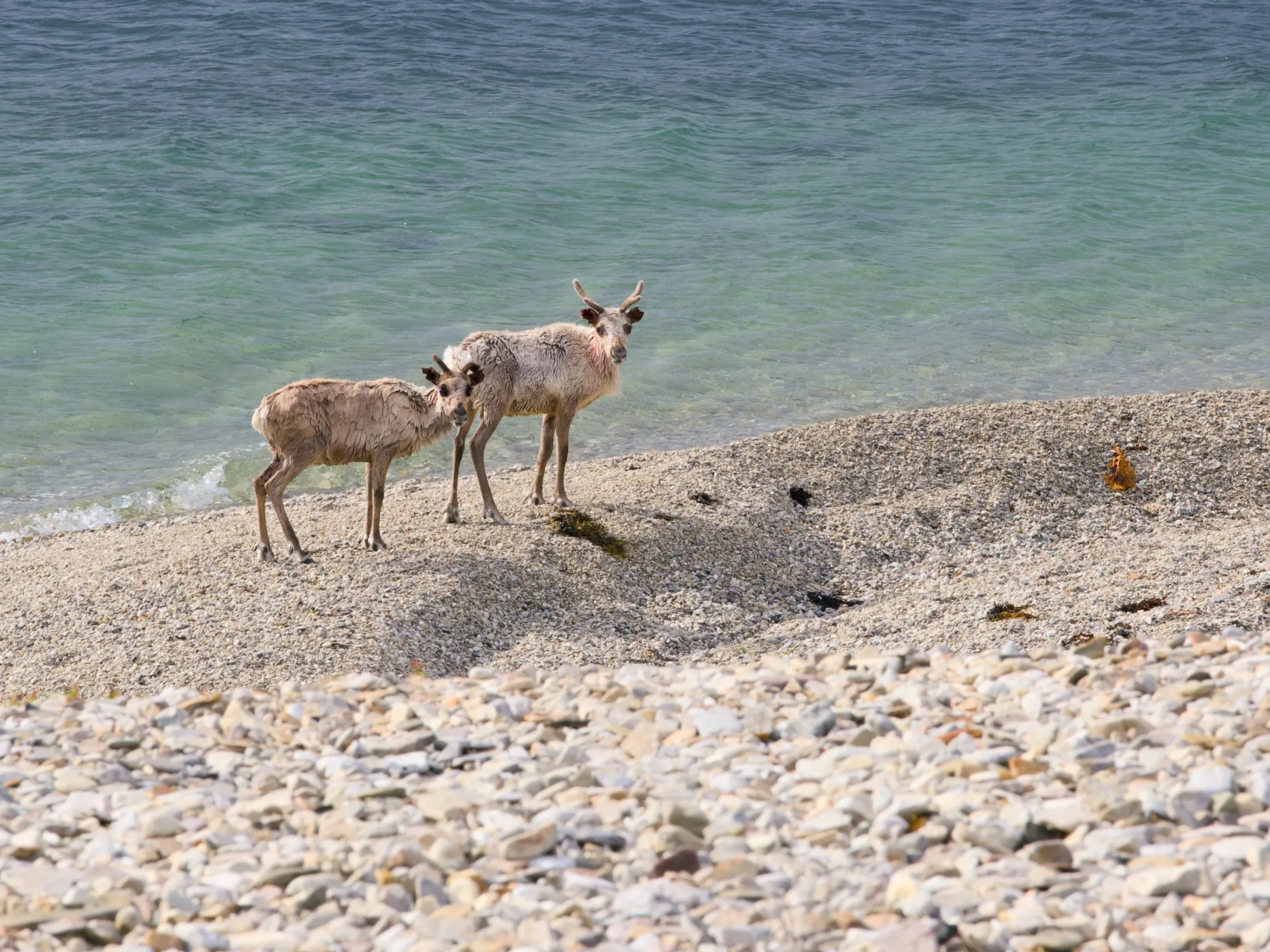 Sometimes you share the beach with reindeer. In summer they come down to the shore, where the wind keeps the insects off.
Gear, lines and flies
- Rod: single-hand 9 ft 6 or 7 weight.
- Lines: intermediate as the default. It sits under the surface chop and keeps you in contact on the strip.
- A stripping basket is a must-have. The waves and wind will make your line a bundle of tangles in the seaweed without one.
- Flies: shrimp patterns (Pattegrisen, Mulkkis, Kobberbassen) in sizes 4 to 12, and small baitfish (Magnus, sand eel, Surf Candy) in sizes 4 to 8.
Try it with a guide
For most fly fishers coastal sea trout is something completely new, and it comes with a real chance at a trophy-size fish. A guide who knows which beach fishes on which tide saves you years of trial and error. Our Arctic Sea Trout Camp runs on the fjords around Alta in May and June.
Coastal sea trout: the short version
- •Sea trout are brown trout that feed in the sea. You wade a beach and cast a fly to them, no boat needed.
- •Some trout are in the fjords all year, but in the Arctic north the best window is May and June, when the fish that wintered in the rivers come down to feed.
- •Fish the tide, not the clock. The guide picks the beach for the tide and the wind.
- •Single-hand 6 or 7 weight, intermediate line, shrimp and small baitfish flies.
- •Twenty-four hours of light from mid-May. The day is as long as you want.
Tommi Heinonen
Founder, Kalakamu
Related reading
Alta, Finnmark, Norway
Arctic Sea Trout Camp
Five nights at a fjord camp near Alta and four guided days for sea-run trout on the Arctic coast. Book the camp for your own group, or join a shared week.
From €1500 / week →
Kautokeino, Finnmark, Norway
Finnmark Fly Fishing
A week fishing for Arctic char and brown trout.
Working on it
Still planning?
The newsletter: new field guides as they are written, open weeks and new dates, a few times a year. Unsubscribe whenever.